

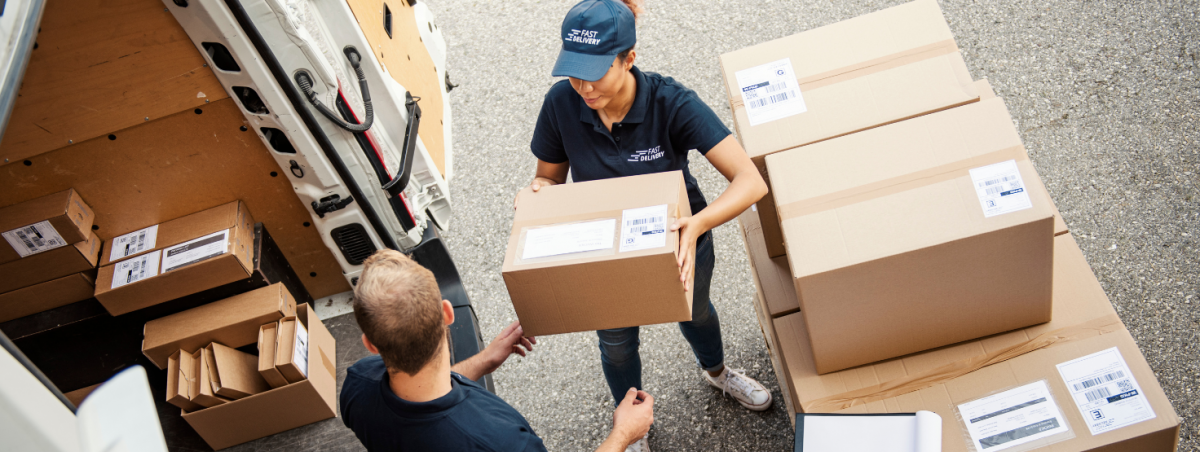
The last mile represents 60 to 70 per cent of parcel delivery cost, and Irish logistics and transport operators who invest in smarter urban delivery infrastructure will be better positioned as cities reshape access and emissions rules. The nShift Future of Delivery: 10 Trends Shaping 2026 confirms that last-mile innovation centres on dense out-of-home networks, cargo bikes, compact electric vehicles, and microhubs. The global last-mile delivery market stood at USD 45.66 billion (€41.1 billion) in 2026, growing at 10.3 per cent through 2035. For Irish logistics and transport operators managing urban delivery and distribution in Dublin and Ireland's regional cities, this is a direct investment signal.
Dublin tested urban last-mile solutions through the Last Mile Delivery SBIR Challenge with Belfast, which trialled consolidation hubs enabling city-centre delivery by electric vehicle, e-bike, and cargo bike. UPS worked with Dublin City Council on micro-hub infrastructure, removing five diesel vehicles from the road and reducing carbon emissions by up to 45 per cent. The learnings confirmed micro-hub consolidation and low-emission last-mile delivery are commercially viable in an Irish urban context.
The commercial case for micro-hub investment is grounded in operational efficiency and delivery density. The Dublin SENATOR project between UCD and An Post showed how micro-hubs enable modal shift to low-emission modes for the final delivery stage. The ITF/OECD confirms load consolidation is the primary operational efficiency lever in urban freight, and micro-hubs enable operators to serve dense delivery zones with smaller, faster, and lower-emission vehicles. For operators with repeated van movements into the city centre, micro-hub investment directly reduces fleet management cost per delivery.
Seventy-two per cent of logistics companies anticipate using an Urban Consolidation Centre within three years; 70 per cent envisage using a micro hub. Micro-hubs cluster goods within city limits, enabling a shift to cargo bikes and compact electric vehicles for final delivery. Out-of-home delivery infrastructure including parcel lockers and PUDO networks is expanding to address failed delivery attempts, the primary cost driver in residential urban delivery.
Dublin City Council has planned expansion to a freight aggregation hub and the city has established itself as a test bed for zero-emission last-mile delivery, creating co-location opportunities that reduce the capital cost of micro-hub entry.
Three actions merit prioritisation. Operators should assess their urban delivery routes to identify zones where micro-hub consolidation and cargo bike deployment would reduce fleet management cost and strengthen operational efficiency in procurement. Organisations should engage with Dublin City Council's freight aggregation hub to identify co-location and partnership opportunities that reduce micro-hub entry cost. Boards should evaluate parcel locker and PUDO partnerships as complementary investments, treating consolidation, last-mile fleet, and collection point networks as the supply chain management model that urban customers increasingly expect.
Ireland's cities are growing, parcel volumes are rising, and smarter urban delivery infrastructure is being built in Dublin. The logistics and transport operators who invest in micro-hub capability, low-emission urban delivery fleet, and out-of-home network partnerships will be better positioned than those relying on van-dominant models as city access and emissions frameworks develop.







.png)

