
Global supply chains are under sustained pressure. Geopolitical instability, trade route volatility, rising regulatory complexity, and the growing imperative to decarbonise are forcing businesses across the transport industry to fundamentally rethink how their logistics operations are structured and who they trust to run them.
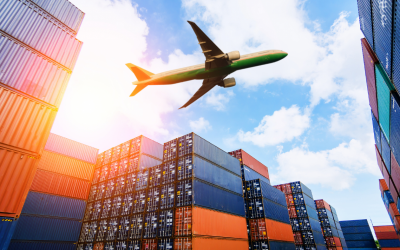
Maersk has positioned itself at the centre of that shift, evolving from a container shipping line into a global integrator of logistics spanning ocean, inland transport, warehousing, customs, and digital supply chain management across 130 countries.
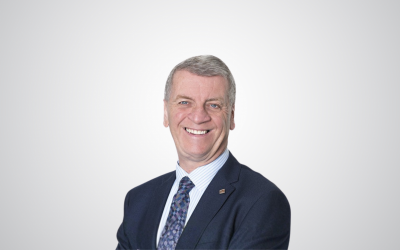
Nigel Kane, Director of Maersk Contract Logistics Ireland, shares his perspective on how Maersk is responding to the pressures reshaping global trade and what supply chain Ireland operators integrated logistics means in practice for businesses operating in an increasingly complex environment.
How would you describe where Maersk sits in the market today?
Maersk today sits firmly as a global integrator of container logistics, rather than a traditional ocean carrier. The strategy has shifted from moving containers port-to-port to orchestrating end-to-end supply chains across ocean, inland transport, warehousing, customs, and digital solutions. In practical terms, Maersk competes not just with shipping lines, but with large 3PLs and supply chain integrators, offering single-provider accountability, asset-backed and non-asset logistics solutions, and global scale paired with local execution. The current focus is on simplification and visibility, enabling customers to move from fragmented supplier networks to connected, resilient supply chains managed through one partner.
Which forces are driving the most significant shift in what customers need right now?
While all pressures are relevant, the most significant driver right now is supply chain uncertainty caused by geopolitical disruption and trade route volatility. This is forcing a shift from cost-focused logistics to:
- Resilience and flexibility
- Diversified routing strategies
- Scenario planning and risk mitigation
Customers are increasingly prioritising:
- Guaranteed capacity and alternatives
- Real-time visibility
- Faster decision-making
Compliance remains critical, but resilience has overtaken cost efficiency as the primary decision driver.
Which areas of Maersk's portfolio are seeing the strongest demand, and where is the company investing?
The strongest growth areas in the Maersk portfolio are contract logistics, warehousing and distribution, where e-commerce growth and nearshoring are driving demand as customers want inventory positioned closer to end markets, and inland transportation, where there is an increasing need for end-to-end solutions beyond the port. Air freight is being used as a resilience lever during disruption, and customs services are expanding rapidly, driven by rising global regulatory complexity. Maersk is investing heavily in warehousing footprint expansion, digital platforms and visibility tools, integrated execution systems, and sustainable transport solutions — part of a broader push toward logistics innovation across the network.
What does genuinely integrated digital logistics look like for a customer in practice?
Genuinely integrated digital logistics means the customer experiences their supply chain as one connected system, not multiple handoffs. In practice, this delivers end-to-end visibility across all modes, a single data layer for planning, execution, and reporting, predictive insights including ETA accuracy and disruption alerts, and centralised control via platforms like NeoNav™. Instead of managing multiple providers, customers can plan shipments, track cargo, manage exceptions, and analyse performance, all in one ecosystem.
What does having one partner manage transport, storage, customs, and supply chain management deliver that a fragmented model cannot?
A single integrated partner delivers value in ways a fragmented model cannot. One partner owns delivery from origin to destination. Fewer handoffs mean less administrative burden and lower risk of failure points. Integrated data enables faster rerouting and better inventory positioning. While not always the lowest upfront cost, it delivers lower disruption cost, reduced buffer inventory, and improved service levels. Ultimately, it shifts logistics from transactional execution to strategic supply chain management.
How central is sustainability to the conversations Maersk is having with customers today?
Sustainability is now central to customer conversations, particularly for large multinationals with scope 3 reporting obligations. Customers are actively seeking low-emission transport alternatives, carbon transparency at shipment level, and tools to track and report emissions. Solutions like ECO Delivery and Emissions Studio are moving from a nice-to-have to a commercial decision driver. Sustainability is increasingly embedded in procurement criteria and linked to brand and regulatory risk.
How is Maersk helping customers build supply chains that can absorb and recover from shocks?
Resilience has become a core service, not an add-on. Maersk's tools enable scenario planning through the Supply Chain Resilience Model, which allows customers to simulate disruptions, proactive risk management through AI-driven insights that identify risks before they materialise, and real-time visibility through Visibility Studio, which provides tracking across all nodes. When disruption occurs, customers have rapid access to alternative routings, modes, and inventory strategies. The goal is to move customers from reactive firefighting to proactive supply chain design.
How are tools like Maersk Customs Services and the Customs Control Tower helping businesses stay compliant without slowing down?
Customs complexity is growing rapidly, and delays can undermine entire supply chains. Maersk supports compliance through integrated customs services embedded into transport flows, the Customs Control Tower, which provides central oversight across all shipments and geographies, and AEO Management Software, which ensures regulatory standards are maintained. The outcome for customers is faster clearance, reduced risk of fines and penalties, and consistent compliance across regions. Crucially, compliance becomes a seamless part of the supply chain, not a bottleneck.
What does a successful integrated logistics partnership look like in practice?
A successful integrated logistics partnership typically delivers across three dimensions. Operationally, customers see improved OTIF performance, reduced lead times, and increased supply chain visibility, clear markers of operational efficiency. Financially, the benefits include lower total landed cost, reduced inventory holding, and fewer disruption-related costs. Strategically, supply chains become more agile, decision-making improves, and customer service capability strengthens. Value is measured through KPI dashboards, service reliability metrics, cost-to-serve improvements, and carbon reduction performance.
How do services like Maersk Accelerate, Flex Route, Intermodal, and Inland Transport work together to give customers genuine agility from port to final destination?
Maersk's strength lies in connecting ocean with inland logistics to create true door-to-door agility. The global shipping network provides the backbone with predictable schedules, while Maersk Accelerate and Flex Route provide flexible routing and priority solutions to manage disruption. Intermodal and inland transport services connect seamlessly to port operations, and all movements are coordinated through integrated digital platforms. The result is the ability to reroute cargo dynamically, reduce port congestion impact, and move goods faster from port to final destination, a supply chain that is connected, adaptable, and responsive in real time.
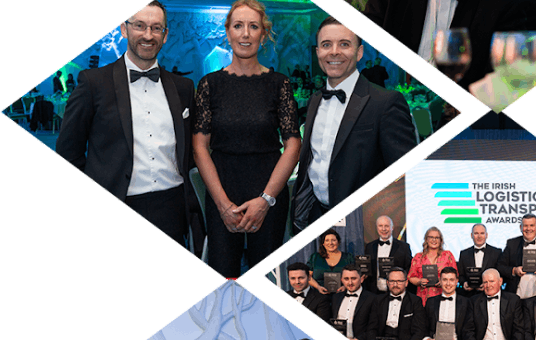
At the Irish Logistics and Transport Awards
Maersk found the opportunity not only to demonstrate its commitment to integrated logistics but also to engage with a community of supply chain professionals, operators, and industry leaders shaping the future of Irish trade. The event provided a valuable platform to exchange insights and strengthen connections with partners and customers navigating the same pressures.
To learn more about Maersk and its end-to-end logistics services across 130 countries, visit maersk.com.
Celebrate your organisation's achievements in logistics and transport. Stay tuned for the upcoming Irish Logistics and Transport Awards 2027, where the sector's leading operators, innovators, and teams come together to recognise excellence and drive the industry forward.


.png)

