

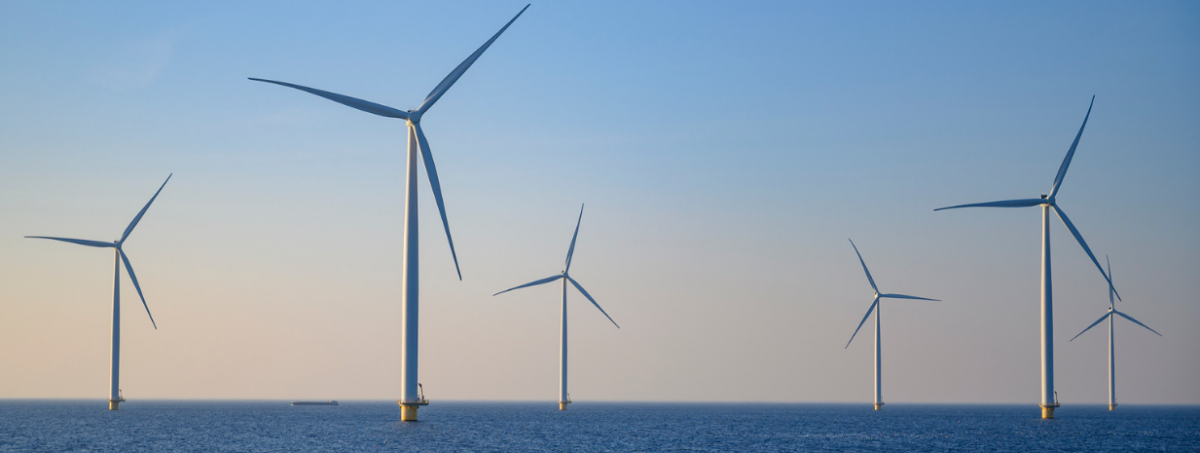
Ireland has set targets of 20GW of offshore renewable energy by 2040 and 37GW by 2050, and the Government's latest progress report shows the supply chain taking shape. The Department of Enterprise, Tourism and Employment reports that 36 of the 40 actions in its Powering Prosperity strategy are complete. The State's second offshore wind auction concluded in December 2025, awarding 900MW at the Tonn Nua site. For Irish logistics and transport operators, this is a growing business-to-business market with developers, contractors, and equipment manufacturers as customers.
Operators who build project freight, abnormal-load haulage, and port-to-site distribution capability now will be well placed to become preferred suppliers as projects move towards construction. The skills are familiar to established operators: heavy transportation, route planning, secure storage, and dependable delivery windows. What is new is the scale of the components and the standard expected by international contractors. Early positioning lets operators build references before main installation begins.
Evidence of a growing domestic market is already visible. An industry survey reported in the progress report shows offshore wind supply chain exports of €96.2 million between 2019 and 2024, including €47 million in 2024, a 119 per cent increase on 2023. Developers increased their spending with Irish suppliers tenfold to €44.3 million. Enterprise Ireland has also provided €11.721 million in grant funding to companies in the offshore wind cohort since 2024.
The strategy names logistics-related opportunities directly. Powering Prosperity lists haulage transportation on land and sea, and vessel and port facilities, among the supply chain opportunities for Irish firms, and places companies that provide logistics services within its Tier 2 contractor group. The EirGrid, Enterprise Ireland, and IDA Ireland memorandum of understanding recognises Irish expertise in areas including materials handling. These references give operators a clear basis for positioning their services with project buyers.
Ports and buyer access are moving in parallel. Phase 1 of the Ireland Strategic Investment Fund and Port of Cork project at Ringaskiddy completes in the first half of 2026, and Port of Cork has set out an ambition to become a hub for offshore renewable energy logistics. Government analysis anticipates Irish ports taking part in component staging and marshalling. EirGrid, Enterprise Ireland, and IDA Ireland held a procurement webinar for around 145 attendees in January 2026, with a follow-on in-person event planned in 2026.
Three actions merit prioritisation. Operators should review their fleet management and transport management capability for abnormal loads, escorted moves, and port-to-site delivery, and document it for project buyers. Organisations should plan warehousing and laydown coordination near the main port regions, and join Enterprise Ireland and EirGrid procurement events to reach developers and Tier 1 contractors. Boards should build the supply chain management credentials international contractors expect, including safety records, tracking, and operational efficiency data.
Ireland's offshore wind pipeline is moving from policy towards procurement, and the supply chain around it is growing. Logistics and transport operators who build project-ready freight and storage capability will be well positioned as developers and contractors look for dependable Irish partners.








.png)

