

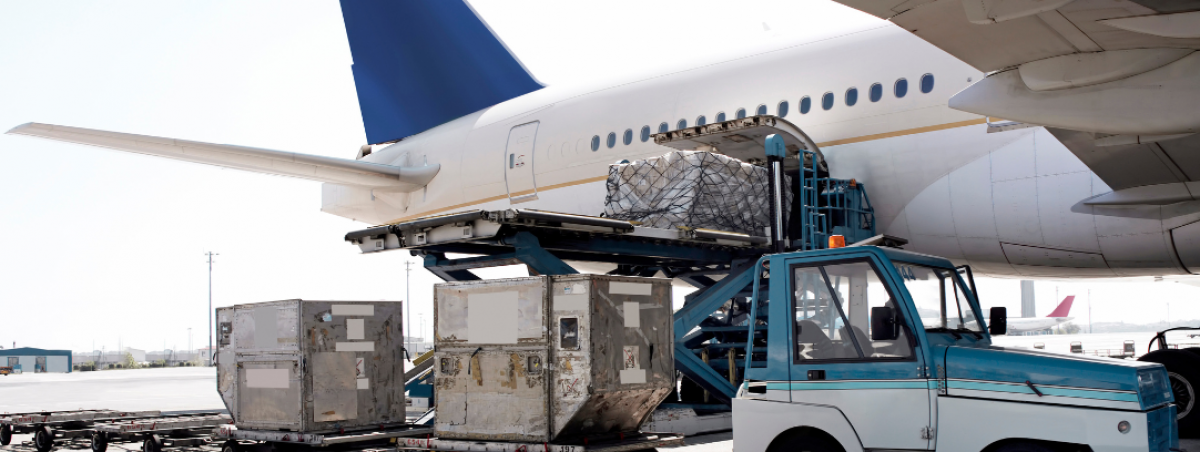
Ireland's air freight market is growing at a rate that demands strategic attention. Air freight tonnage at Irish airports rose 8 per cent year-on-year in the third quarter of 2025, according to the Central Statistics Office Aviation Statistics Q3 2025, published in December 2025. Dublin Airport handled a record 36.4 million passengers and 169,400 tonnes of cargo in 2025. The convergence of passenger and freight growth raises a question: how proactively are logistics and transport organisations securing cargo capacity Ireland's export economy requires?
The case for treating air cargo as a strategic asset rather than a transactional afterthought is compelling. Ireland's pharmaceutical, medtech, and technology exports are dependent on belly-hold air freight, yet that capacity is being compressed by record passenger load factors and fleet constraints. Three developments underpin the investment case: belly-hold compression, the growing value density of pharmaceutical freight, and the commercial imperative of Sustainable Aviation Fuel alignment.
Belly-hold compression is the most immediate structural pressure on cargo availability. The KPMG Ireland Aviation Leaders Report 2026, published in February 2026, identifies record global load factors of 84 per cent in 2025. When passenger cabins are full, belly-hold space contracts and pricing power shifts to carriers. For Irish exporters moving pharmaceutical and high-value goods on transatlantic routes, this shows in capacity and booking windows. Operators who secure dedicated freighter relationships and forward agreements outperform those booking spot.
The pharmaceutical freight dimension adds strategic urgency. Ireland exports over €99 billion in pharmaceutical and medical products annually, with nine of the world's top ten pharmaceutical companies on the island, according to IDA Ireland. A significant proportion, particularly biologics and temperature-sensitive medicines, requires certified, GDP-compliant air freight. The Freightos Air and Ocean Freight Forecast 2026, published in January 2026, confirms agile redeployment will characterise the market. Dedicated pharmaceutical freight lanes and GDP-certified partnerships are the differentiator between reliability and disruption.
Sustainable Aviation Fuel is the third dimension reshaping air cargo. EU mandates require SAF blending of two per cent from 2025, rising to 70 per cent by 2050, and freight customers in pharmaceutical and technology sectors are specifying SAF-aligned logistics as a supply chain condition. Operators who develop SAF procurement strategies and engage with airline partners will be better placed to retain contracts with multinationals driving Ireland's air freight volumes.
Three actions merit prioritisation. Operators should establish dedicated cargo relationships with freighter operators serving Irish airports, securing agreements that reduce dependence on spot-market availability. Organisations should invest in GDP certification and temperature-controlled handling, positioning as preferred partners for pharmaceutical manufacturers. Boards should develop SAF procurement strategies, ensuring cargo contracts align with the reporting requirements of exporting clients.
Ireland's air freight market is growing, its export base is structurally dependent on cargo services, and the competitive landscape is tightening. The CSO Aviation Statistics Q3 2025 confirms the momentum; the KPMG Aviation Leaders Report 2026 confirms the constraints. Logistics operators who build the relationships, capabilities, and credentials to serve Ireland's most valuable exporters will secure a position in the country's most important logistics segments.
(The views expressed by the writer are his/her own and do not necessarily reflect the views or positions of BusinessRiver.)








.png)

