

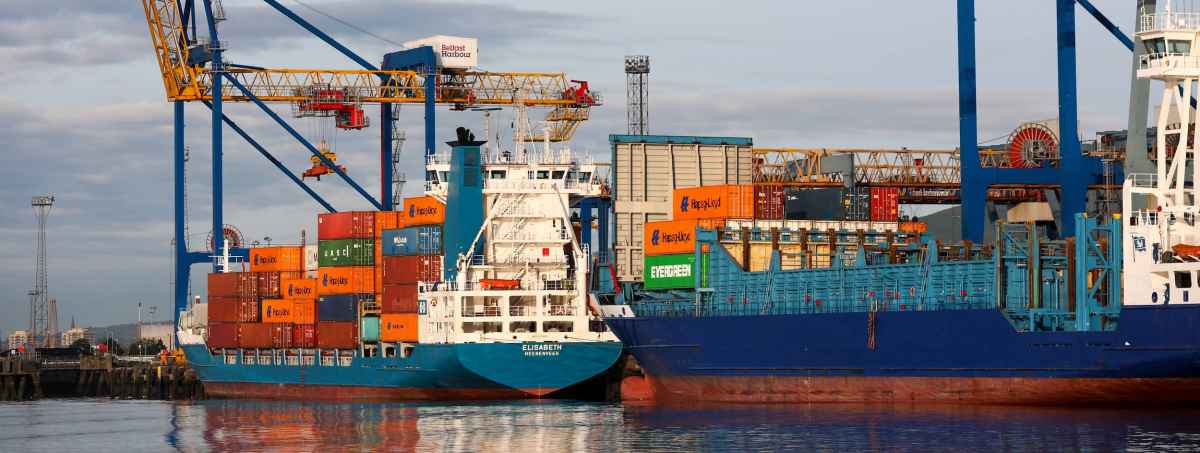
Belfast Harbour is to become a live testing environment for zero-emission transport and energy systems through a £15 million investment from UK Research and Innovation, with Belfast-based Artemis Technologies leading the project. The Zero Emissions Transport and Energy Cluster (ZETEC) will connect electric vessels, high-power marine charging, autonomous transport and energy systems through secure digital twin technology, giving the port sector evidence on how they perform as one system.
Belfast Harbour is Northern Ireland’s principal port and a trust port that receives no public funding. It handled 24.3 million tonnes of cargo in 2025, with turnover of £97.1 million and underlying profit before tax of £44.4 million, and has begun building a £90 million deepwater quay, the largest single capital scheme in its history.
Artemis Technologies is a privately owned maritime technology company based in Belfast’s Titanic Quarter, employing more than 170 people and building electric foiling vessels on its patented eFoiler system.
The ZETEC funding is public money. It comes from UK Research and Innovation’s Local Innovation Partnerships Fund and is the second project announced from a £30 million allocation to the Belfast-Derry Innovation Corridor, announced by Northern Ireland’s Economy Minister. The fund brings together local leaders, businesses and research organisations to build on regional strengths.
The structural driver is evidence. Testing the technologies together in an operational port setting will show how they perform as an integrated system and help reduce barriers to commercial adoption.
Dr Iain Percy OBE, chief executive of Artemis Technologies, said, “We’ve always focused on turning innovative technologies into practical solutions that deliver real-world impact. Through ZETEC, we’re collaborating with leading partners to demonstrate how electric vessels, charging infrastructure and digital technologies can work together to support the transition to cleaner, more efficient transport.”
For the sector, the project puts electric vessels, charging infrastructure and autonomous transport into one working port, so operators and port users get operational evidence rather than separate demonstrations.
Source: Export & Freight / Port Technology / Belfast Chamber








.png)

